
What is the First Home Savings Account (FHSA) in Canada?
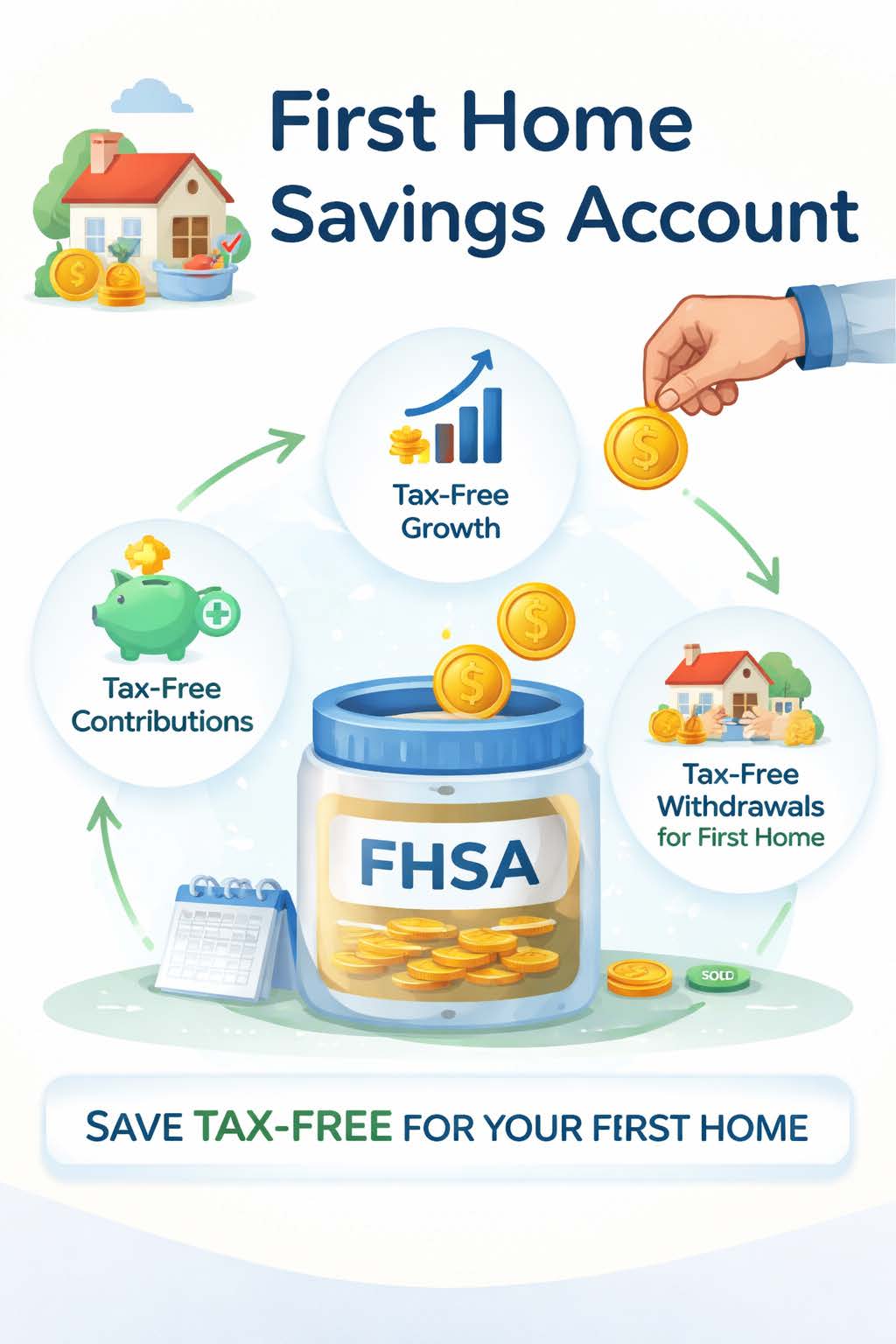
The First Home Savings Account, or FHSA, is a new type of registered account that is designed to help first-time home buyers purchase their first home—tax-free. The FHSA was announced by the Canadian federal government in the 2022 Budget and came into effect on April 1, 2023.
The FHSA is like a registered retirement savings plan (RRSP) because your contributions to an FHSA are tax deductible; and withdrawals to buy a qualifying property will also be non-taxable, which is also like a tax-free savings account (TFSA).
FHSA Canada: How it works
Through this tax-free program, Canadians 18 to 40 years old are allowed to deposit $8,000 annually with a lifetime contribution of $40,000, helping them save for the down payment on their first home in Canada.
Who is eligible for the FHSA?
The FHSA combines features from an RRSP and a TFSA. As with RRSPs, contributions are generally tax deductible; and like TFSAs, any qualifying withdrawal to purchase a qualifying property is not taxable, including on any income or gain.
To be eligible for the FHSA, you must meet the following requirements:
- Be a Canadian resident
- Be 18 years old or older
- Be a first-time home buyer
Key features
Other key features of the FHSA include the following:
- Investments
- Contributions and deductions
- If you do not buy a home
- Qualifying withdrawals
- Transfer of funds
- Difference between FHSA and Home Buyers Plan
Let’s take a closer look at each of the key features to determine if an FHSA is right for you:
1. Investments
You can hold the same investments in an FHSA as you do in an RRSP or a TFSA, including government and corporate bonds, cash, publicly traded securities, mutual funds, and guaranteed investment certificates.
Your FHSA account can remain open for 15 years (max.) or until the end of the year that you turn 71 years old. Your account will also stay up until the end of the year after the year that you made the qualifying withdrawal from an FHSA (whichever comes first).
2. Contributions and deductions
As mentioned, annual contributions can be as high as $8,000 per year up to a $40,000 contribution limit. A maximum of $8,000 in unused contribution to your FHSA can carry over into the next year. You can also claim an income tax deduction for the FHSA contributions made in the calendar year or in the year prior (if not deducted previously)
3. If you do not buy a home
Any money that you withdraw from your FHSA and do not use to buy a qualifying property are subject to tax. On the other hand, the balance of your FHSA not used on a property can be transferred to a registered retirement income fund (RRIF) or an RRSP. This may be on a non-taxable transfer basis, which would then be subject to applicable rules.
If you transfer funds from your FHSA to either your RRIF or RRSP, it will not affect your available RRSP contribution room. Note, however, that any money transferred to an RRIF, or an RRSP will then be taxed upon withdrawal
4 Qualifying withdrawals
When you make a withdrawal for the purchase of a qualifying property, you must be a first-time home buyer and a Canadian resident. So what is a qualifying home? A qualifying home is essentially a home located in Canada and includes a share of the capital stock of a cooperative housing corporation.
Additionally, you must have a written agreement to build or buy a home in Canada before October 1 of the year following the year of withdrawal. Within one year of building or buying, you must occupy the home as your principal place of residence.
5. Transfer of funds
you can transfer money on a tax-free basis from your RRSP to your FHSA. However, this type of transfer is subject to FHSA lifetime and annual contribution limits and are not deductible from your income. Another important note is that transfers from your RRSP to your FHSA do not restore your RRSP contribution room.
6. Difference between FHSA and Home Buyers’ Plan
Canadians are allowed to withdraw up to $35,000 from their RRSP with the current Home Buyers’ Plan (subject to conditions and eligibility). Over the following 15 years, you can then repay the funds to your RRSP. Your FHSA, unlike the Home Buyers’ Plan, does not need to be repaid.
Can I open a FHSA if I already own a home?
The FHSA is an investment tool designed to help first-time homeowners in Canada. Since every Canadian’s situation is different, you might run into some grey areas when it comes to your FHSA—such as the definition of a “home”.
With FHSAs, the definition of a home is crucial. If you or your spouse have lived in the home you have owned this year or any of the previous four calendar years, you cannot open an FHSA or make a tax-free withdrawal. You can only make tax-free withdrawals if you buy a qualifying home.
What is the FHSA limit in Canada?
The FHSA limit in Canada for prospective home buyers is a contribution of up to $8,000 of tax-free savings per year. The lifetime contribution limit is $40,000. If you start an FHSA but have not contributed the full amount each year, you can carry forward a maximum of $8,000 for use the next year. Additionally, any income earned on FHSA savings do not reduce the participation room for the next year.
FHSA accounts also have a participation period of 15 years maximum, which means, if you are the account holder, you must transfer all the money and close the account 15 years after you opened it, to avoid being taxed on it.
Checklist to open account
To open an FHSA, you must provide the following information:
- Contact your FHSA issuer
- Provide information such as your date of birth, your social insurance number, and any supporting documents your issuer might require certifying that you are a qualifying individual.